A good New Year’s resolution for couples is not about becoming a flawless, hyper-productive duo by February. It is about choosing a few intentional habits that make daily life feel more connected, supported, and enjoyable. The best goals are specific enough to act on, flexible enough for real life, and meaningful to both people.
Instead of each partner making a separate list and hoping the relationship benefits somehow, set aside an unrushed hour to decide what you want more of this year: calm, laughter, honesty, adventure, security, affection, or progress toward a shared dream.
How to choose resolutions you will actually keep
Start with a simple question: What would make us feel more like a team by the end of the year? Each of you can write down three answers separately, then compare notes.
Aim for one goal in each of these areas:
- Connection and communication
- Quality time and fun
- Household or financial teamwork
- Personal growth and future plans
Keep the list short. Three to five shared resolutions are far more likely to last than 20 ambitious promises. For each goal, agree on the smallest repeatable action—not just the big outcome. “Communicate better” is vague; “have a 20-minute check-in every Sunday evening” is something you can put on the calendar.
12 meaningful New Year’s resolutions for couples
### 1. Have a weekly relationship check-in
Choose one consistent time each week to ask: What felt good between us this week? What was difficult? What do you need from me in the week ahead?
This does not need to become a formal meeting. Make tea, take a walk, or sit down after dinner. The point is to address small frustrations before they turn into a backlog of resentment.
### 2. Protect one date night each month
A date does not have to mean reservations, new outfits, or a big budget. Try alternating who plans it. One month might be a museum afternoon; the next could be homemade pizza and a no-phone movie night.
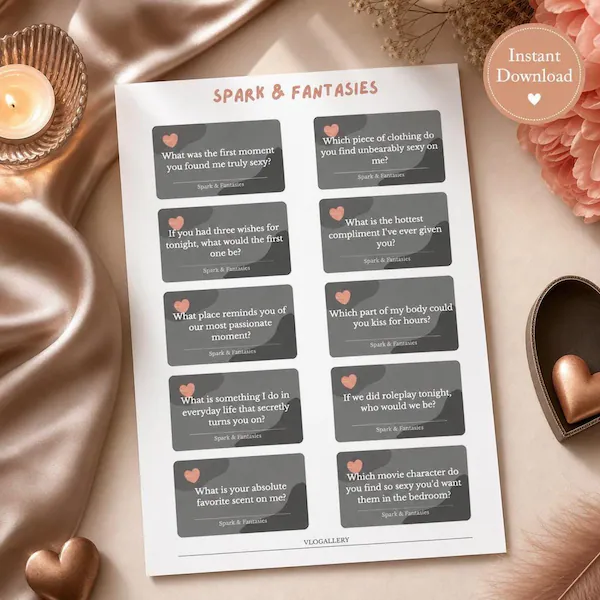
For couples who want conversation to be the activity rather than just background noise, Spicy Questions for Couples | Printable Date Night Cards | Valentine's Day Anniversary Activity can give an at-home date night a more playful, intentional starting point.
### 3. Put phones away during one daily moment
Pick a realistic phone-free window: breakfast, the first 30 minutes after work, dinner, or the final half hour before bed. You are not trying to eliminate screens; you are creating one dependable space where each person gets the other’s full attention.
### 4. Learn how each other feels loved right now
Needs can change with work stress, parenthood, health, or a busy season. Ask directly: “What is one small thing I could do this month that would help you feel cared for?”
The answer might be more hugs, help with an errand, a kind text during the day, or simply listening without immediately trying to solve the problem.
### 5. Make a shared money plan without blame
Money talks are easier when they are regular and practical rather than triggered by a surprise expense. Set a monthly “money date” to review bills, savings, upcoming costs, and one shared priority.
Consider goals such as building an emergency fund, paying down one debt, saving for travel, or setting a guilt-free personal spending amount for each partner. Treat the budget as a shared tool, not a report card.
### 6. Share the invisible household work
Many couple conflicts are not about a single dirty dish; they are about who notices, remembers, plans, and follows through. Make a complete list of recurring tasks, including scheduling appointments, buying gifts, meal planning, and replacing household essentials.
Then divide ownership, not just individual chores. When someone owns a task, they handle the remembering and planning too.
### 7. Try one new experience every month
Novelty creates memories and helps long-term relationships feel less routine. Keep it affordable and low-pressure: cook a cuisine neither of you knows, visit a nearby town, take a beginner class, try a new hiking route, or host friends for a game night.
Make a shared “12 things to try” list on New Year’s Day and choose one item each month.
### 8. Become better at repairing after conflict
Disagreements are normal. A useful resolution is not “never fight,” but “return to each other respectfully after a fight.” Agree on a pause phrase when emotions are running high, such as, “I want to solve this, but I need 20 minutes to calm down.”
When you come back, focus on the issue at hand. Use “I felt…” statements, avoid bringing up old evidence, and end with one concrete next step.
### 9. Support individual goals, too
Being a team does not mean doing everything together. Ask what each person wants to grow this year—career, fitness, creativity, friendships, rest, or confidence—and decide how the other partner can help.
Sometimes support is active encouragement. Sometimes it means protecting an evening each week for your partner’s class, hobby, or solo time without guilt.
### 10. Talk honestly about your next chapter
If you are considering a major step—moving in, engagement, marriage, or parenthood—make room for conversations before decisions become urgent. Discuss values, expectations, practical responsibilities, and fears with curiosity rather than trying to reach every answer in one night.
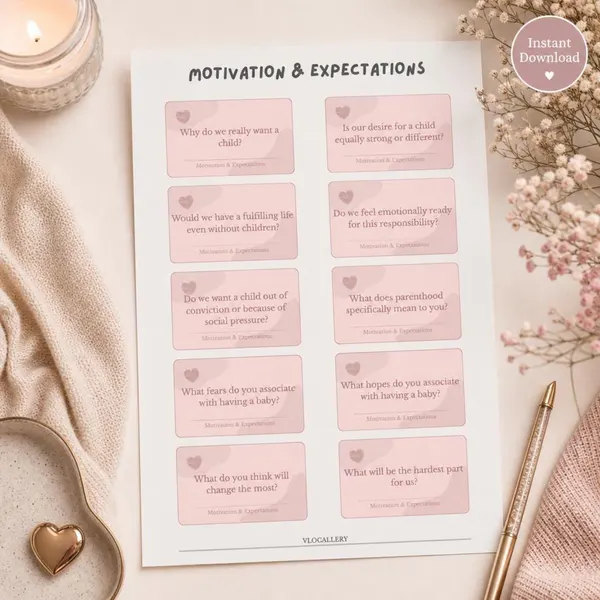
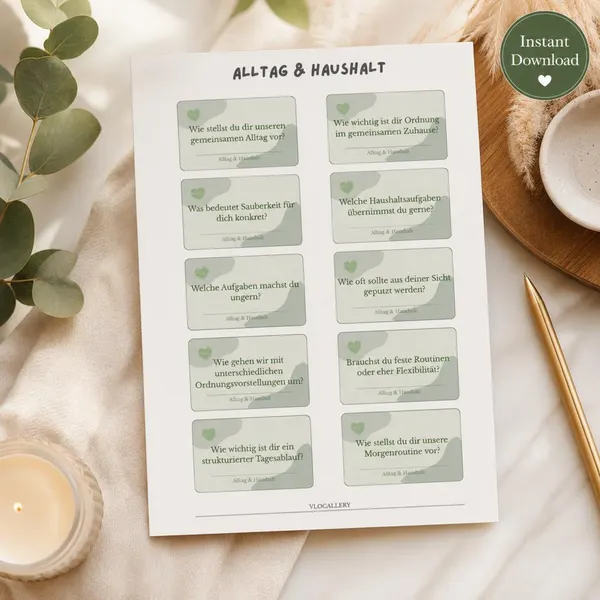
Couples preparing for parenthood may find Questions Before Having a Baby | Printable Conversation Cards | Partners Preparing for Parenthood helpful for opening up important discussions. If moving in together is the next step, Zusammenziehen Fragen Paare | Digitale Beziehungskarten PDF | Date Night vor dem Einzug is designed around that transition.
### 11. Celebrate ordinary wins
Do not save appreciation for anniversaries or major milestones. Notice the small things: a difficult conversation handled well, a stressful week survived, a personal goal achieved, or the fact that you made time for each other.
Try a monthly ritual of sharing one thing you appreciated about your partner and one memory you want to keep from the month.
### 12. Create a yearly tradition that belongs to you
A shared tradition gives the relationship a sense of continuity. It could be a New Year’s walk, a yearly letter to each other, a photo book, a weekend getaway, or a home-cooked meal where you review the past year and choose next year’s intentions.
The tradition does not need to look impressive online. It just needs to feel like yours.
Turn intentions into a simple plan
Before finishing your conversation, write each resolution in this format:
- Our goal: Have more intentional time together.
- Our action: One phone-free date night per month.
- When: First Friday of every month.
- How we will review it: Discuss it during our monthly check-in.
Revisit your list every three months. Keep what is helping, adjust what is unrealistic, and drop goals that no longer fit your life. The purpose of couples’ New Year’s resolutions is not to prove your relationship is perfect. It is to keep choosing each other, in small and practical ways, all year long.