Becoming parents is exciting, but it can also bring up fear, grief for your current routine, pressure to “get ready,” and surprisingly different expectations between partners. None of those feelings mean you are not ready for a baby. They mean you are taking a major life transition seriously.
Emotional preparation is less about reaching total certainty and more about building a habit of honesty, teamwork, and repair before you are tired, stretched, and learning on the fly. Here is how to begin.
Make space for mixed feelings
You can want a child deeply and still worry about money, your relationship, your identity, sleep, birth, or whether you will be a good parent. Try not to treat anxiety as a problem to solve immediately. Instead, tell each other what is underneath it.
A helpful weekly check-in can start with three questions:
- What am I looking forward to this week?
- What is weighing on me or making me nervous?
- What support would feel good from you right now?
Listen without rushing to reassure, debate, or fix. Sometimes the most connecting response is simply, “That makes sense. I am here with you.” When both people can bring up hard emotions without being judged, you create a valuable foundation for the postpartum months.
Talk about expectations before they become resentments
Many couples agree on the big picture—“we will share the work”—but have very different ideas about what sharing looks like at 3 a.m., during parental leave, or when one person feels overwhelmed.
Set aside a calm, distraction-free hour to discuss the details. You do not need perfect answers; you need to know where your assumptions differ. Talk through topics such as:
- Who handles which household tasks now, and what needs to change?
- How will you divide nighttime care as fairly as possible?
- What does each person need to feel rested, appreciated, and connected?
- How will work, leave, childcare, and finances affect each partner?
- What role do family members and friends have after the birth?
- How will you protect time for yourselves as individuals and as a couple?
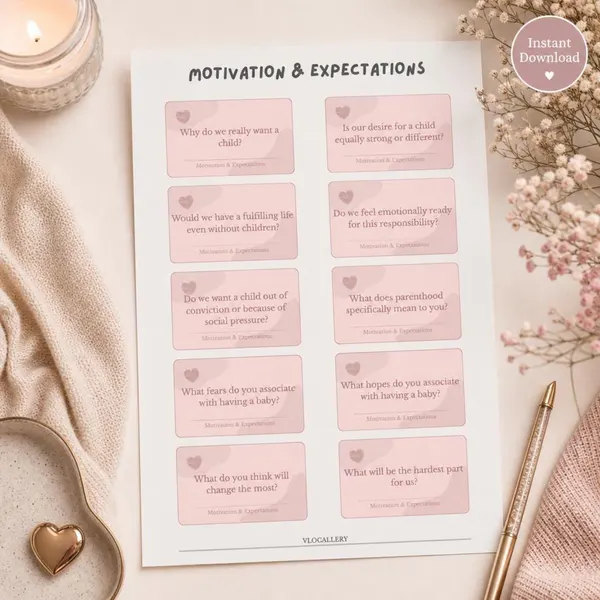
If you would like a little structure for this conversation, Questions Before Having a Baby | Printable Conversation Cards | Partners Preparing for Parenthood can give you prompts to explore together. A guided format can make it easier to move beyond logistics and into the feelings and values behind your decisions.
Learn each other’s stress signals
Parenthood can make even loving partners more reactive. Sleep deprivation and constant responsibility reduce patience, so it helps to identify your patterns before you are in the middle of them.
Each of you can share:
- What you look like when you are nearing overload
- What tends to make you shut down, snap, or feel criticized
- What kind of help actually helps
- What words or actions make you feel cared for
- How you prefer to reconnect after an argument
Then create a simple “pause plan.” For example: either person can say, “I am flooded; I need 20 minutes,” take a break, and agree on a specific time to return to the conversation. The key is that a pause is not abandonment. It is a tool for preventing a small disagreement from becoming a bigger wound.
Practice being a team in ordinary life
You do not have to wait until baby arrives to practice partnership. Look at your current life and choose one recurring responsibility that you will plan, divide, and review together: meals, cleaning, appointments, budgeting, or family communication.
The goal is not to split every task exactly down the middle. It is to make invisible work visible. Notice who remembers, initiates, researches, plans, and follows up—not only who physically completes the task. This awareness makes it easier to have fairer conversations later.
Try a short Sunday meeting with four agenda items: logistics for the week, one practical need, one emotional check-in, and one thing you appreciate about each other. Ten intentional minutes can be more useful than waiting for a crisis to force a conversation.
Protect your relationship from becoming all business
Preparing for a baby naturally comes with lists: healthcare decisions, gear, budgets, leave plans, and childcare research. Those things matter, but your relationship also needs moments that are not about managing a future child.
Keep a low-pressure connection ritual. It might be a walk after dinner, coffee together before screens, a weekly at-home date, or asking one meaningful question before bed. The ritual does not need to be elaborate; consistency matters more.
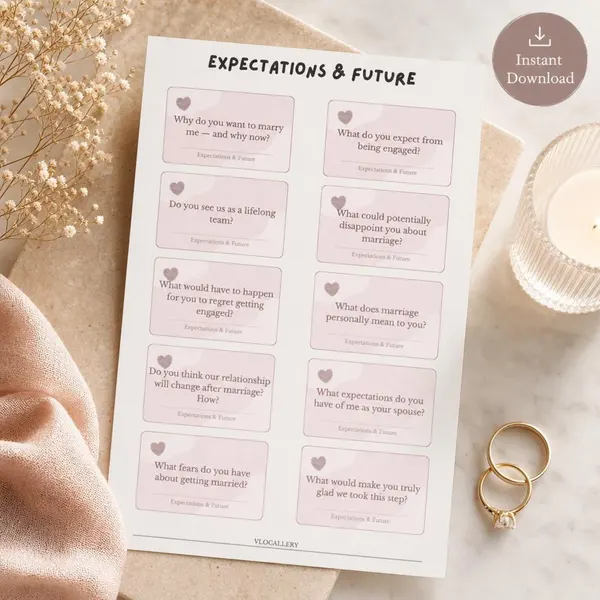
Couples who enjoy deeper conversation may also like adapting prompts from Premarital Questions for Couples | Printable Conversation Cards | Engagement Date Night. Although designed for engaged couples, topics around values, conflict, goals, and partnership can be useful at any stage of a committed relationship.
Build a support plan, not just a baby plan
No couple is meant to do everything alone. Emotional readiness includes being realistic about the help you may need and giving yourselves permission to accept it.
Make a list of possible support people and be specific about what they could offer: dropping off a meal, walking the dog, holding the baby while you shower, running an errand, or listening without giving advice. Also discuss boundaries. You may welcome visitors, or you may want a quiet recovery period. Either choice is valid when you agree on it together.
If either of you has a history of anxiety, depression, trauma, loss, or difficult family dynamics, consider connecting with a therapist or perinatal mental-health professional before birth. Support is not a sign that something is wrong; it is part of preparing thoughtfully.
Remember that readiness is a shared practice
You will not resolve every fear or predict every challenge before becoming parents. What you can do is become more practiced at telling the truth, asking for help, dividing care with intention, and finding your way back to each other after hard moments.
That is the emotional preparation that lasts: not a flawless plan, but the confidence that you can face an unknown season as partners.