Getting married does not require agreeing on everything. It does require knowing where you differ, understanding what matters most to each other, and learning how to work through the hard topics as a team.
The best premarital conversations are not a test your relationship can pass or fail. They are a chance to replace assumptions with clarity before life gets busier, more expensive, and more complicated. Set aside relaxed time for these talks—one topic at a time—and aim to listen rather than win.
Questions About Money and Financial Priorities
Money is rarely just about numbers. It can represent security, freedom, generosity, status, or control, depending on how each person grew up. Start with full honesty, even if the conversation feels awkward.
Ask each other:
- What debts, savings, investments, or financial obligations do we each have?
- How do you prefer to manage money: fully combined, fully separate, or a mix of both?
- What does a fair split of household expenses look like if our incomes differ?
- How much should we save each month, and what are we saving for?
- What purchases should we discuss before making them?
- How do you feel about lending or giving money to family and friends?
- If one of us loses a job, goes back to school, or wants to change careers, how would we handle it?
- What does “financial security” mean to you personally?
Do not stop at broad answers such as “we’ll figure it out.” Talk through a realistic monthly budget, your wedding costs, housing goals, insurance, and any habits that could create resentment later. A shared plan can evolve, but avoiding the subject is not a plan.
Questions About Family, Boundaries, and Traditions
Marriage joins two people, but families of origin often influence the relationship in powerful ways. Discussing family expectations early can prevent hurt feelings around holidays, visits, privacy, and advice.
Try these questions:
- How involved do you want our families to be in our daily lives and decisions?
- How will we divide holidays, birthdays, and major celebrations?
- What family traditions do you hope to continue—and which ones do you not want to repeat?
- What does healthy privacy look like when talking with parents or siblings about our relationship?
- How should we respond if a family member is disrespectful, intrusive, or critical of one of us?
- Are there cultural, religious, or personal traditions that are especially important to you?
- If a relative needs financial help or care in the future, what role do you expect us to play?
The goal is not to make either partner choose sides. It is to make sure your marriage has clear boundaries and that both of you feel protected within it.
Questions About Conflict and Emotional Support
Every couple disagrees. The more useful question is whether you know how to disagree without damaging trust. Notice not only what you argue about, but what each of you needs when emotions run high.
Consider asking:
- What makes you feel unheard or dismissed during an argument?
- When you are upset, do you want space first or immediate conversation?
- What words, tones, or behaviors feel unacceptable during conflict?
- How do you know when an apology feels sincere?
- What helps you feel reassured after a disagreement?
- How did conflict work in your family growing up, and what do you want to do differently?
- When should we ask for help from a counselor or trusted professional?
Create a few practical agreements: no name-calling, no threats to leave during an argument, no bringing up old resolved issues as weapons, and a clear way to return to a conversation after taking a break. Those habits matter far more than never fighting.
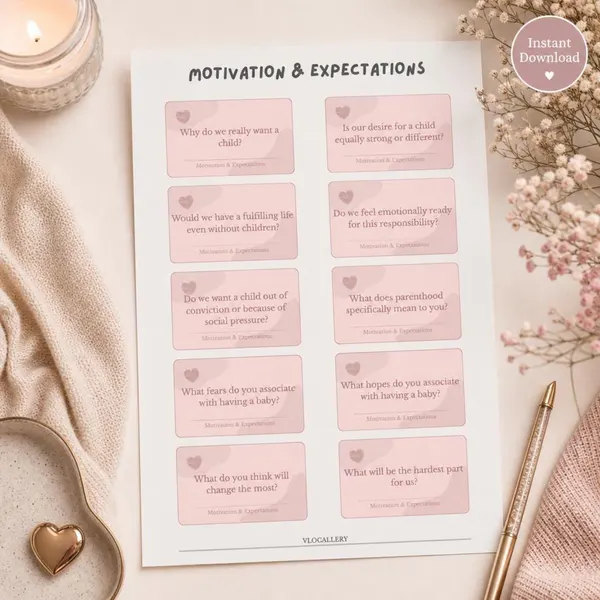
Questions About Children and Parenting
Even if children are not part of your current plan, it is wise to discuss the possibility directly. “Someday” can mean very different things to different people.
Talk about whether you both want children, how many, and on what timeline. Discuss fertility concerns, adoption, pregnancy loss, and what you would do if parenthood does not happen as expected. You can also explore childcare, career changes, discipline, education, religion, and how responsibilities would be divided.
For couples preparing to go deeper on this subject, Questions Before Having a Baby | Printable Conversation Cards | Partners Preparing for Parenthood offers focused prompts for a dedicated conversation night.
Questions About Lifestyle, Intimacy, and Future Plans
A strong marriage needs room for both shared dreams and individual identity. Discuss the everyday life you want, not only the big milestones.
Questions worth asking include:
- Where do we want to live in the next five to ten years?
- How important are travel, hobbies, friendships, fitness, faith, or quiet time to each of us?
- What does a satisfying division of chores and mental load look like?
- How do we want to protect time for connection after marriage?
- What does intimacy mean to each of us, and how can we discuss changing needs without shame?
- What personal goals do we want each other to support?
- What do we want our home and daily routine to feel like?
You do not need to settle every future decision today. You do need a shared sense of how decisions will be made when circumstances change.
Make the Conversation Feel Less Like an Interview
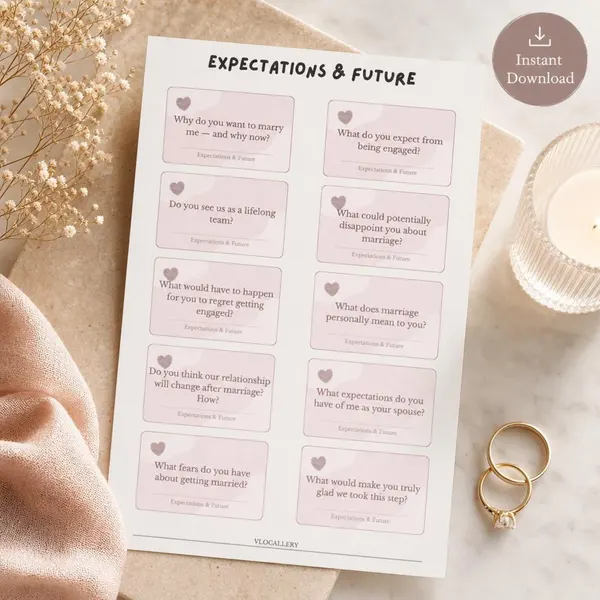
Choose one or two themes per date night rather than attempting every serious topic in a single sitting. Take turns answering first, ask follow-up questions, and write down any decisions or items to revisit. If a subject becomes tense, pause with kindness instead of forcing a conclusion.
If you would like a little structure without making it feel formal, Premarital Questions for Couples | Printable Conversation Cards | Engagement Date Night can give you prompts to work through together.
The most valuable outcome is not perfect agreement. It is the confidence that you can be honest, stay curious, and face the important parts of life on the same team.