Getting engaged is exciting, but it is also a decision to build a shared life—not simply plan a beautiful wedding. The best pre-engagement conversations are not tests with “right” answers. They are chances to understand each other’s expectations, spot areas that need more discussion, and practice approaching differences as a team.
You do not need to cover everything in one intense evening. Choose a relaxed time, take one topic at a time, and leave room for answers that change as you learn more. The goal is not perfect agreement; it is clarity, honesty, and a shared commitment to work through real life together.
1. What does marriage mean to each of us?
Start with the big picture. People can love each other deeply while carrying very different assumptions about what a spouse should be, do, or prioritize.
Ask questions such as:
- Why do we each want to get married?
- What would make us feel supported and loved in marriage?
- What did we learn about relationships from our families?
- How do we want our partnership to be different from the relationships we grew up around?
- What does commitment look like during a difficult season?
Listen for the values beneath the answers. One person may picture marriage as constant togetherness, while another may see it as a secure base that still protects independence. Neither view is automatically wrong, but naming the difference now prevents hurt feelings later.
2. How will we handle money as a team?
Financial conflict is rarely just about numbers. Spending can represent freedom, security, generosity, status, or anxiety. A transparent conversation before engagement is far kinder than discovering major differences after wedding deposits are paid.
Talk openly about income, debt, savings, credit, financial obligations to family, and spending habits. Then move beyond disclosure and discuss your future system:
- Will you combine accounts, keep separate accounts, or use a hybrid approach?
- What purchases need a conversation first?
- How will you divide everyday costs if your incomes differ?
- What are our savings goals for a home, travel, retirement, or emergencies?
- How much are we comfortable spending on a wedding?
You do not need identical habits. You do need a plan both people understand and consider fair.
3. What kind of family life do we want?
Children, pets, caregiving, holidays, and where you live all belong in this conversation. These subjects can feel far away when you are focused on an engagement, but they shape daily life more than almost any wedding decision.
If you both want children, discuss timing, preferred family size, parenting values, childcare, and how you would handle fertility challenges or differing needs. If one of you does not want children—or is unsure—treat that answer with seriousness and respect. Hoping someone will eventually change their mind is not a plan.
Also talk about extended family. How often do you expect to visit? What boundaries might you need? If a parent becomes ill or needs financial help, what would each of you hope to do? There may not be immediate answers, but knowing each other’s instincts matters.
4. How do we communicate when we disagree?
Every couple disagrees. The important question is whether you can stay respectful, repair after a conflict, and solve the actual problem rather than trying to win.
Ask each other:
- What makes you feel unheard in an argument?
- Do you need space to calm down, or do you prefer to resolve things quickly?
- What words or behaviors are off-limits when we are upset?
- How do you know when an apology feels sincere?
- When should we ask for help from a counselor or trusted professional?
Pay attention to patterns, not just promises. If conversations regularly turn into name-calling, silent treatment, threats, controlling behavior, or fear, pause before moving forward. Premarital counseling can be a thoughtful, proactive tool, not a sign that a relationship is failing.
5. What will our everyday responsibilities look like?
Love does not wash dishes, schedule appointments, remember birthdays, or manage a household budget by itself. Discussing practical labor may sound unromantic, but it is one of the most caring conversations you can have.
Talk about chores, cooking, cleaning, errands, home maintenance, social planning, and the often invisible mental load of noticing what needs doing. Consider work schedules, career ambitions, travel, education, and periods when one partner may need more support.
A useful question is: “What responsibilities do you naturally notice, and which ones do you tend to overlook?” This creates a more realistic starting point than assuming tasks will divide themselves fairly.
6. How will we protect intimacy, friendship, and individuality?
A strong marriage needs more than logistics. Discuss what helps each of you feel emotionally close and physically connected, as well as how you will make time for fun once life gets busy.
You might ask how often you want intentional date time, what affection means to each of you, how you handle stress-related changes in intimacy, and what personal hobbies or friendships you want to maintain. A healthy partnership makes room for both “us” and “me.”
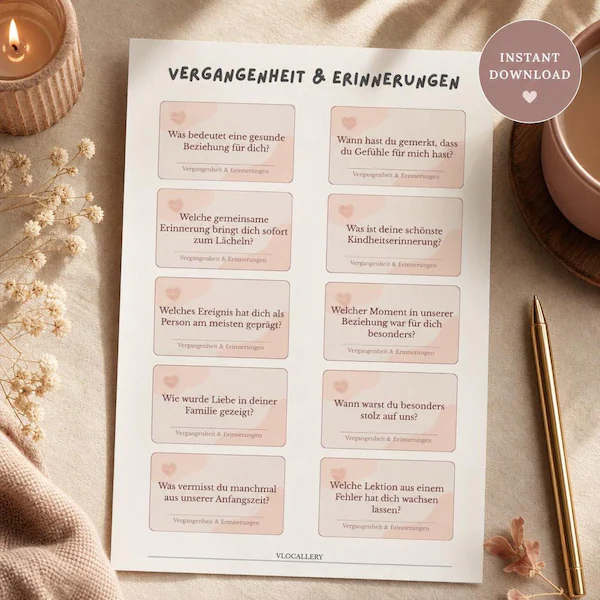
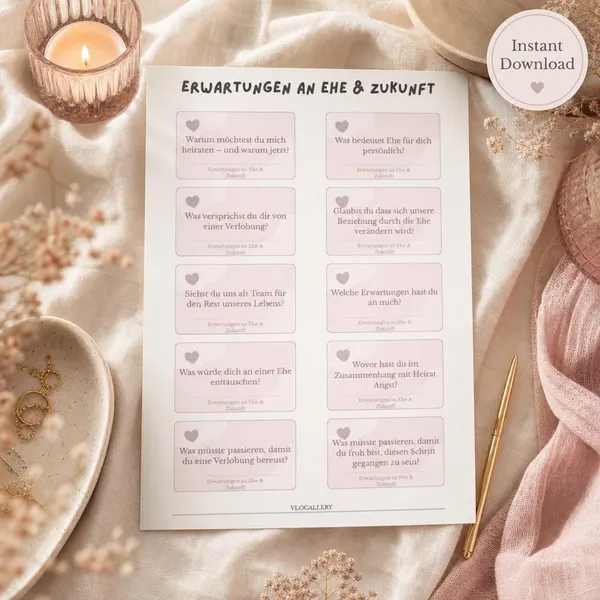
For a gentler way to open these conversations at home, the Fragen vor der Verlobung | Ehegespräche als PDF für Paare | Date Night zuhause is specifically centered on questions before an engagement. If you want to keep the habit going after that initial talk, Fragen für Paare | Deep Talk Karten digital | Paarabend zu Hause can add fresh prompts to a quiet date night.
7. What does our future look like—and what can stay flexible?
Discuss where you hope to live, career priorities, lifestyle goals, faith or cultural traditions, travel, and the experiences that matter most to you. Then separate non-negotiables from preferences. Perhaps living near family is essential for one person, while the exact city is flexible. Perhaps one partner needs room to pursue a demanding career, while the other needs a predictable shared routine.
Write down a few shared priorities and revisit them occasionally. Engagement is not a contract that every detail of life must remain fixed. It is a commitment to keep having honest conversations as your circumstances, dreams, and needs evolve.
The most reassuring outcome is not discovering that you agree on every answer. It is realizing that you can bring up hard topics with care, hear each other fully, and make decisions together.