Moving in together is exciting, but it also turns everyday assumptions into shared decisions. The goal is not to agree on every preference before you get the keys. It is to discover where you differ, decide how you will handle those differences, and make sure both people can speak up without fear of starting a fight.
Set aside a relaxed, distraction-free evening for this conversation rather than trying to cover everything during a stressful apartment viewing. Take notes, revisit anything unresolved, and treat your first plan as flexible—not as a contract you can never change.
Start with the practical move-in plan
Before discussing the big relationship topics, get clear on the logistics. Uncertainty around deadlines and expenses can make small disagreements feel much bigger.
Talk through:
- The timeline: When will you apply, sign, move, and switch over utilities?
- The location: How will commute time, proximity to friends or family, parking, and neighborhood safety affect each of you?
- The lease: Will both names be on it? What happens if one person needs to move out early?
- Furniture and belongings: What are you bringing, what needs replacing, and what can you live without?
- Moving costs: Deposits, movers, truck rental, cleaning supplies, internet setup, and the first grocery run add up quickly.
- Pets and guests: Are pets part of the plan now or later? How often are overnight guests comfortable for each partner?
A useful rule: avoid vague promises such as “we’ll figure it out.” Choose a date to decide, assign the next step, and write it down.
Have an honest money conversation
Money is one of the most important things couples should discuss before moving in together. This is not about judging one another’s spending. It is about building a setup that feels fair and sustainable.
Discuss your monthly income, fixed obligations, debts, savings goals, and any financial support you give or receive. Then decide how rent and shared bills will work. A 50/50 split is simple, but a proportional split based on income may feel more equitable when earnings differ significantly.
Be specific about:
- Rent, utilities, internet, groceries, and household supplies
- Shared streaming services and subscriptions
- Dining out, takeout, and dates
- Furnishings and repairs
- Emergency savings and unexpected costs
- Whether you will use a joint account, a shared expense app, or reimburse each other
Also define what counts as a shared expense. If one person wants an expensive coffee machine, for example, is that a household purchase or their personal purchase? There is no universal right answer—only an answer you both understand.
Decide how chores will actually get done
“Let’s split chores evenly” sounds fair, but it is too vague to prevent resentment. People often have different standards for tidiness, different work schedules, and different definitions of “later.”
Make a list of recurring tasks: dishes, cooking, laundry, bathroom cleaning, vacuuming, trash, shopping, meal planning, pet care, bills, and arranging repairs. Include the invisible work too, such as noticing the toilet paper is low or remembering to book an appointment.
Then choose a system that suits your household:
- Divide tasks by preference and skill.
- Rotate jobs neither of you enjoys.
- Set a weekly reset time for cleaning and planning.
- Agree on a baseline standard for shared spaces.
- Revisit the arrangement after the first month.
Try to phrase needs clearly: “I feel calmer when dishes are done before bed” is more useful than “You never help.”
Talk about routines, space, and alone time
Living together does not mean doing everything together. In fact, couples usually do better when each person still has room for their own friendships, hobbies, rest, and routines.
Ask about sleep schedules, work-from-home needs, exercise, meals, noise, screen time, and mornings. One partner may like music while cooking; the other may need quiet after a long day. Small preferences are easier to accommodate before they become daily irritations.
It is also worth discussing privacy. Are phones private? Is it okay to open each other’s mail? Do either of you need a desk, room corner, or regular time at home alone? Naming these boundaries is a sign of respect, not distance.
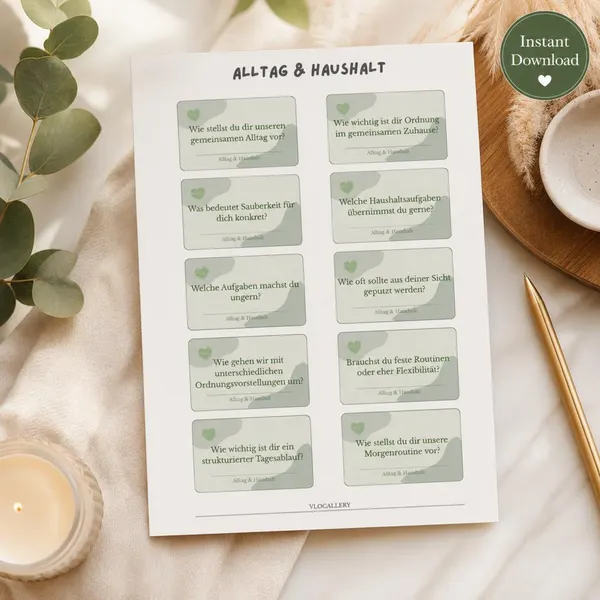
If you want a guided way to cover these questions, the Zusammenziehen Fragen Paare | Digitale Beziehungskarten PDF | Date Night vor dem Einzug is specifically designed around conversations before moving in and can make the discussion feel more like a date night than a checklist meeting.
Agree on conflict and communication habits
Every couple disagrees. What matters is how you repair after a disagreement and whether both people feel heard.
Before moving in, discuss what each of you needs when upset. Does one person need a short break to cool down while the other wants to solve the issue immediately? Agree on how to request space and, just as importantly, when you will come back to the conversation.
Make a few simple commitments:
- Bring up frustrations before they turn into scorekeeping.
- Avoid insults, threats, and bringing up unrelated past mistakes.
- Use “I” statements and describe the specific behavior at issue.
- Apologize without adding “but.”
- Schedule a weekly or monthly check-in about the household and relationship.
A regular check-in can be short: what went well this week, what felt difficult, and one practical adjustment for next week. It prevents every conversation from happening only when someone is already frustrated.
Discuss the relationship beyond the apartment
A shared home is part of your life together, not the entire plan. Talk about what this step means to each of you. Is it primarily practical, a step toward engagement or marriage, or simply something you want to try? Neither person should have to guess.
You may also want to discuss future hopes around marriage, children, career changes, travel, family responsibilities, and where you might want to live long term. These are not demands for immediate decisions; they are opportunities to check whether your directions are compatible.
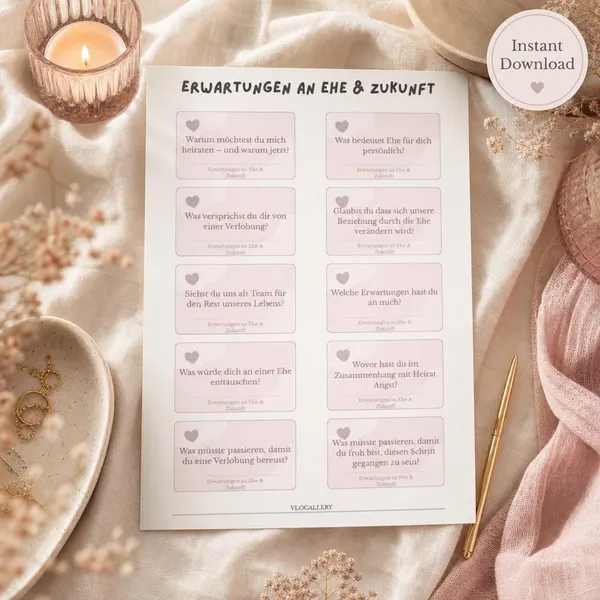
For couples who are also thinking ahead to engagement, Fragen vor der Verlobung | Ehegespräche als PDF für Paare | Date Night zuhause offers a separate set of relationship conversations for that next stage.
Finish with a trial period, not perfection
You cannot predict every issue before moving in. The first few weeks will reveal things neither of you thought to ask: cabinet habits, thermostat preferences, grocery styles, and how each person decompresses after work.
Plan a check-in after 30 days. Ask what is working, what feels unfair, and what one change would make home feel better for each of you. Moving in together is less about getting every answer right in advance and more about proving that you can make thoughtful decisions as a team.